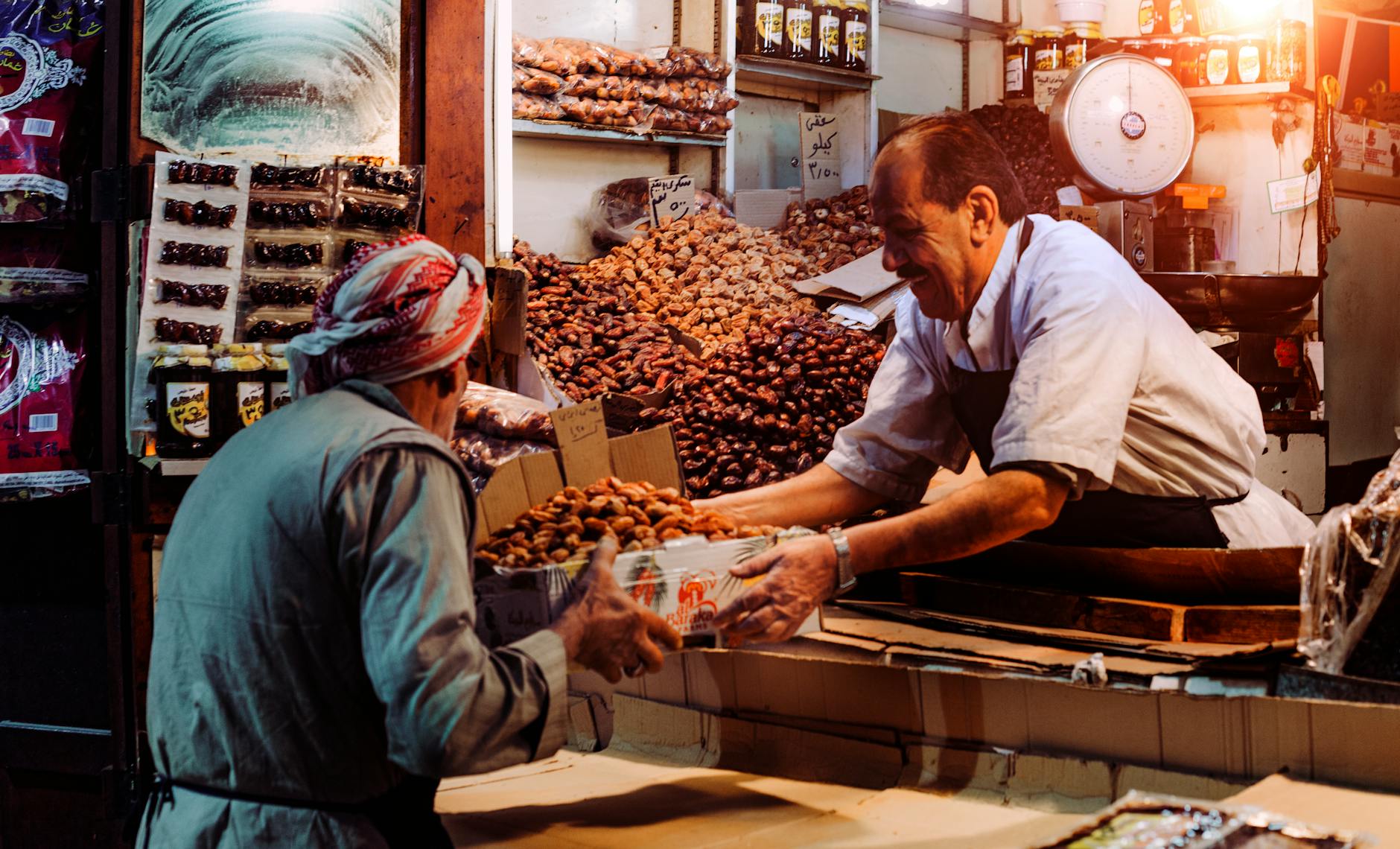
Lonely Planet named Old Dubai food tours among their Best in Travel Experiences for 2026, which means two things: the experience genuinely deserves the attention, and the prices have probably gone up. Both are true. But the core of what makes a walk through Deira and Bur Dubai so good hasn't changed — it's still one of the few places in the city where the original Dubai is still legible in the streets.
Old Dubai food tours typically cover the spice souk, the gold souk, a crossing of Dubai Creek by abra, and a series of food stops in the old commercial district. The eating is the point, but it's hard to separate the food from where you're eating it. A cup of karak chai tastes different when you're standing in a narrow Deira alley watching a spice trader weigh saffron than it does anywhere else.
What you'll eat on the tour
A typical four-hour tour covers somewhere between six and ten food stops. Some are structured (you sit down, the guide explains the dish), most are on the move. Here's what usually comes up:
- Karak chai — spiced milk tea, usually the first stop. Strong, sweet, essential.
- Luqaimat — small fried dough balls with date syrup. They're served hot and sold by weight from small stalls around Al Fahidi.
- Shawarma — the Deira version tends to be chicken, tightly rolled, heavy on garlic sauce. Different from what you get in the newer parts of the city.
- Fresh juice — mango, sugarcane, pomegranate. Stalls near the abra dock charge around AED 8–12.
- Mutabbaq — stuffed pancake, usually with egg and minced meat. Popular in the Indian and Pakistani restaurants around Al Rigga.
- Dates and Arabic coffee — you'll encounter these at heritage sites as a welcome offering. Don't skip them even if you've had coffee already.
Most tours end with a sit-down meal at an Emirati or Yemeni restaurant. Expect slow-cooked lamb, rice, and sauces that take hours to make. It's the best meal of the tour by a margin.
The abra crossing
The abra is a wooden water taxi that runs across Dubai Creek between Deira and Bur Dubai. It costs AED 1 per person and runs continuously from early morning to late night. The crossing takes about five minutes. It's a functional piece of transport that's been running since before Dubai was Dubai, and riding it gives you one of the better views of the old city — the cranes of Deira on one side, the Al Fahidi district and its wind towers on the other.
Guided tours include the abra crossing as part of the route. If you're doing a self-guided version, just show up at the Al Sabkha abra station in Deira or the abra dock near the Dubai Museum and join the queue.
The spice souk and gold souk
The spice souk is a covered market selling dried spices, herbs, frankincense, and rose water in bulk. The smell when you walk in is genuinely good — turmeric, cardamom, dried lime. Prices are negotiable. You don't have to buy anything but it's worth picking up some frankincense resin if you have a luggage allowance — it's far cheaper here than at the airport.
The gold souk is larger and less atmospheric but worth the walk through. Dubai has one of the highest gold-per-capita retail densities in the world, and the souk makes that visible in a way that's hard to absorb at first. Hundreds of shops, thousands of pieces. If you're buying, get the gold weighed and priced separately from the making charges, which vary by shop.
Doing it yourself vs. taking a guided tour
Self-guided is entirely possible and costs basically nothing beyond the food. The area is walkable, well-signposted, and safe at any hour. The downside is context — a good guide explains which ingredients in the spice souk are worth cooking with, which restaurants have been there for 40 years and which opened last month, what the architecture of the wind towers actually does. That's worth something.
Guided tours run AED 180–350 per person, usually 4–5 hours, and include all food stops. Morning departures (around 9 AM) get the best market activity; evening departures (4 PM onwards) get better light for photos and cooler temperatures.
Getting there and best time to go
The Al Fahidi metro station (Red Line) drops you directly into the Bur Dubai heritage area. Alternatively, the Union metro station connects to Deira. If you're driving, parking near the creek is frustrating — the metro is the better option.
Avoid Fridays before noon if you want full souk access — some smaller shops close for Friday prayers. The souks are generally open from 9 AM to 10 PM daily, with a midday break between 1–4 PM in some shops.
Roamigo runs guided Old Dubai food tours and creek experiences for small groups. If you want to book a tour or get a self-guided walking route sent to your phone, get in touch.
Written by
harshad
harshad is a travel writer at Roamigo Trips, based in Dubai. With first-hand experience across UAE destinations — from desert safaris to coastal escapes — every guide is written from real adventures.
Meet the team →

